Color & play
Leaf Rubbings for Kids: Make an Autumn Pattern Collection
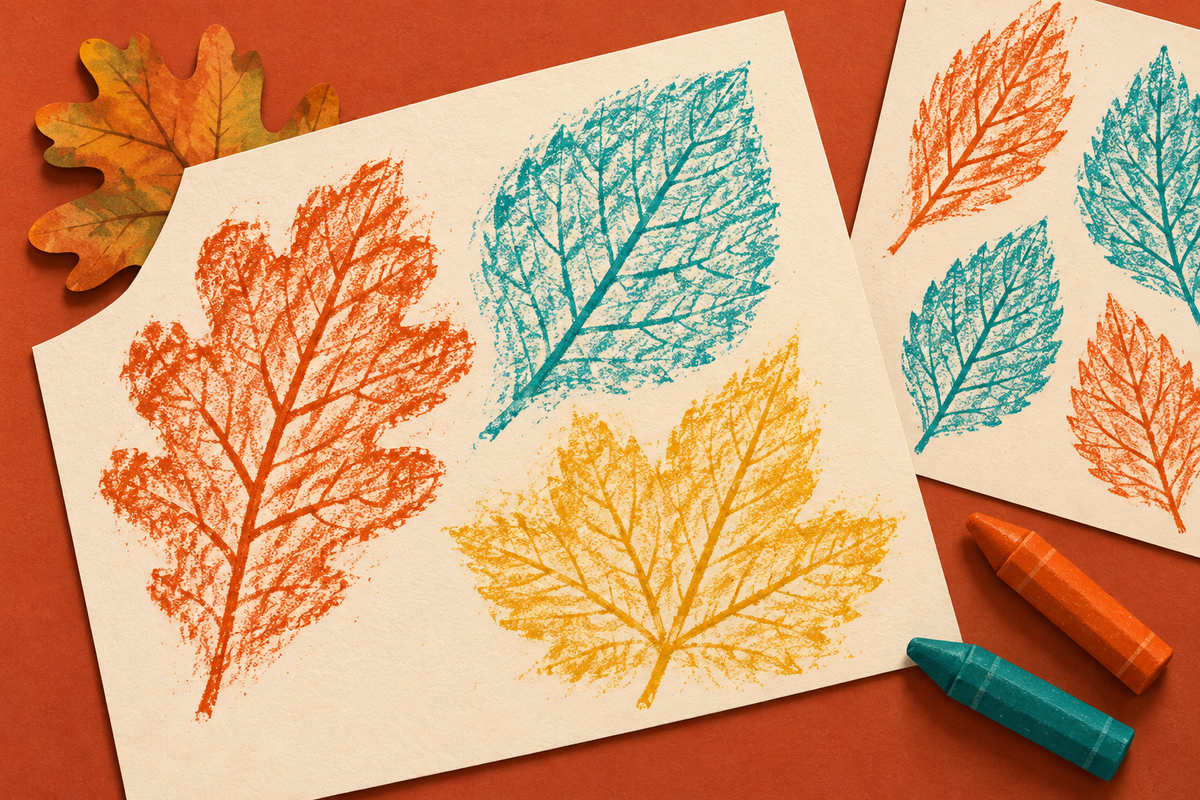
To make a leaf rubbing, place a leaf under thin paper and gently sweep the side of a wax crayon across it. The raised edges and veins leave a textured impression. Try a few different leaves, then arrange the impressions into your own autumn pattern collection.
This is an invitation to notice and make, with no perfect picture to copy. One leaf and one color can be enough for a short afternoon activity.
What you need
- A few clean, dry, fallen leaves that an adult has checked are suitable to handle
- Thin plain paper
- Large wax crayons with some of the wrapper removed by an adult
- A flat table and optional tape to keep the paper still
Choose flexible leaves rather than brittle ones that crumble. Stay with younger children, keep leaves away from mouths and wash hands afterward. If your child still mouths objects, let the adult handle the leaves and offer a separate sheet for supervised mark making with age-appropriate crayons.
Make your first rubbing
- Look before covering. Notice the leaf's outline and the lines running across it. Turn it over and feel gently for the side with more prominent veins.
- Set up the paper. Put the leaf on the table with that textured side facing up. Lay the paper over it. Hold the paper steady or tape its corners to the table.
- Use the crayon's side. Sweep lightly across the covered leaf. Begin with gentle pressure; pressing hard can cover the details in a solid patch of color.
- Peek and compare. Lift the paper and place the rubbing beside its leaf. Which parts appeared? Which are harder to see?
If little appears, try thinner paper or a leaf with a more noticeable texture. If the picture slides into a blur, hold the paper more firmly. Treat these adjustments as part of trying the activity together.
Turn the rubbings into a pattern collection
Move the leaf beneath a fresh part of the page and make another impression. Try an orange leaf, then a teal leaf, then orange again. Invite your child to continue the sequence or invent a new one. The colors can be completely imaginary.
Another option is to repeat one shape while changing its direction. Point each leaf toward the next, or arrange them around an empty circle. Keep a small gap between impressions so their outlines remain easy to see.
For an open-ended version, make a leaf creature. Add drawn feet, wings or a tiny home beside the rubbing. These are suggested starting points, not instructions every child needs to follow.
Make it fit your child
For ages 1–4: an adult can prepare and hold the paper while the child chooses a crayon and tries a few broad marks. Use one large leaf, short turns and very simple choices. Young toddlers may prefer watching the impression appear. Follow their interest and stop if materials go toward the mouth.
For ages 4–8: compare two leaf shapes, use the same crayon on both, and describe what looks different. Older children can invent a repeating sequence, make a small collection of impressions or add their own descriptive labels. There is no need to identify the tree if you are unsure.
Questions that leave room for noticing
- Which lines appeared first?
- What changes when you rub more gently?
- Where could the next leaf go in your pattern?
Choose one question rather than turning the activity into a quiz. For more choices with color and pattern, try our five imaginative coloring prompts. If your child enjoys comparing two sides, explore the mirror monster drawing activity.
You can also find starting points for another creative afternoon on the Tinker & Twirl bookshelf. An unfinished page can wait; a small collection made in your child's own way is enough.
More rubbing ideas
The Royal Horticultural Society's bark-rubbing activity offers a related outdoor way to explore texture using paper and chunky wax crayons. Our pattern and drawing variations above are optional creative extensions.