Creative play · Drawing together · Parent guide
Drawing Together Without Taking Over: A Parent's Play Guide
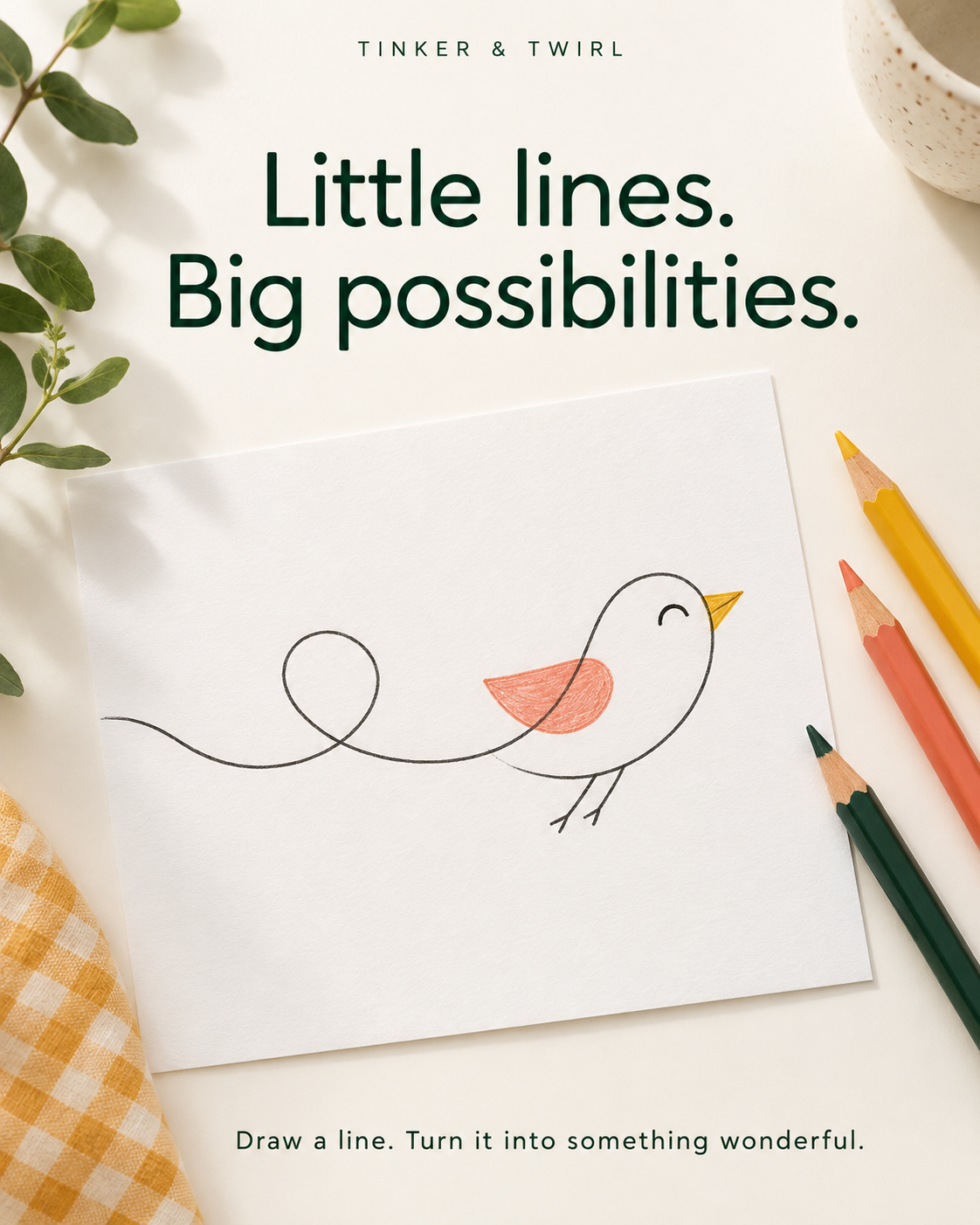
Your child asks you to draw with them. You sit down, make a neat house, and suddenly their own picture feels unfinished. A shared drawing can also begin another way: two people making choices side by side, with room for different ideas. Try this invitation when you want something simple to do together with paper and crayons.
Start with two pieces of paper
Give each person their own sheet and put a few drawing tools between you. Use supplies suitable for your child's age, and supervise as needed. Separate pages let you join in without adding marks to a picture your child wants to keep their own. Ask before sharing a page: “Would you like separate pictures, or shall we make one together?” Either answer works.
Choose an invitation rather than a finished result. “Let's invent somewhere a tiny creature could live” leaves space for a cave, a cloud or a very unusual cupboard. You do not need to make a model for your child to copy. If they already have an idea, follow their lead instead of introducing a new task.
Offer a choice, then leave room
A blank sheet can be welcome, or it can feel like too many decisions. If your child wants a starting point, offer two possibilities: a winding line or a big patch of colour; a creature or a place. They can choose something else. You can make your own choice on your own page and describe it briefly: “I'm putting a door up here because my creature can fly.”
Pause between suggestions. One question does not need to become a stream of instructions. If your child is busy, draw alongside them quietly. There is no requirement to fill the page, use every colour or explain the picture while making it.
Describe what you can actually see
Try “Your line goes all the way around the edge” or “You've used three different greens.” These observations give your child something concrete to respond to without deciding what the picture should mean. Instead of guessing “Is that a dog?”, you can ask, “Would you like to tell me about this part?” They may tell a long story, give a short answer or prefer to keep drawing.
If they ask for help with a tricky shape, ask what kind of help they want. You might demonstrate on a spare sheet, hold the paper steady or listen while they describe their plan. Check before drawing on their work. A requested demonstration can be useful; it does not need to become a corrected version of their picture.
Make it easier or add another possibility
For a younger child, offer a larger sheet and suitable chunky crayons. Shared marks and colour choices can be the whole activity. For a child who enjoys more detail, add an optional story question: how does someone reach that floating door, or what happens when it rains? Treat the answer as theirs to invent.
If working together becomes frustrating, return to separate sheets or stop. You can leave an unfinished picture nearby for another day. A shared activity does not need a matching pair of finished artworks to count as time spent together.
End with your child's decision
Ask whether they want to keep the drawing, give it away, photograph it or carry on later. If they want a title, write down their words with permission. Keep any next step small. You can explore another invitation in our warm and cool colour play guide, or try a different kind of making with our paper spinner activity.
For more drawing and colouring invitations, browse Tinker & Twirl and check the age range and availability of the edition you choose. Your child's next idea can still be entirely their own.